Blood Pressure Checks
Free NHS blood pressure checks to monitor your cardiovascular health — walk-ins welcome.
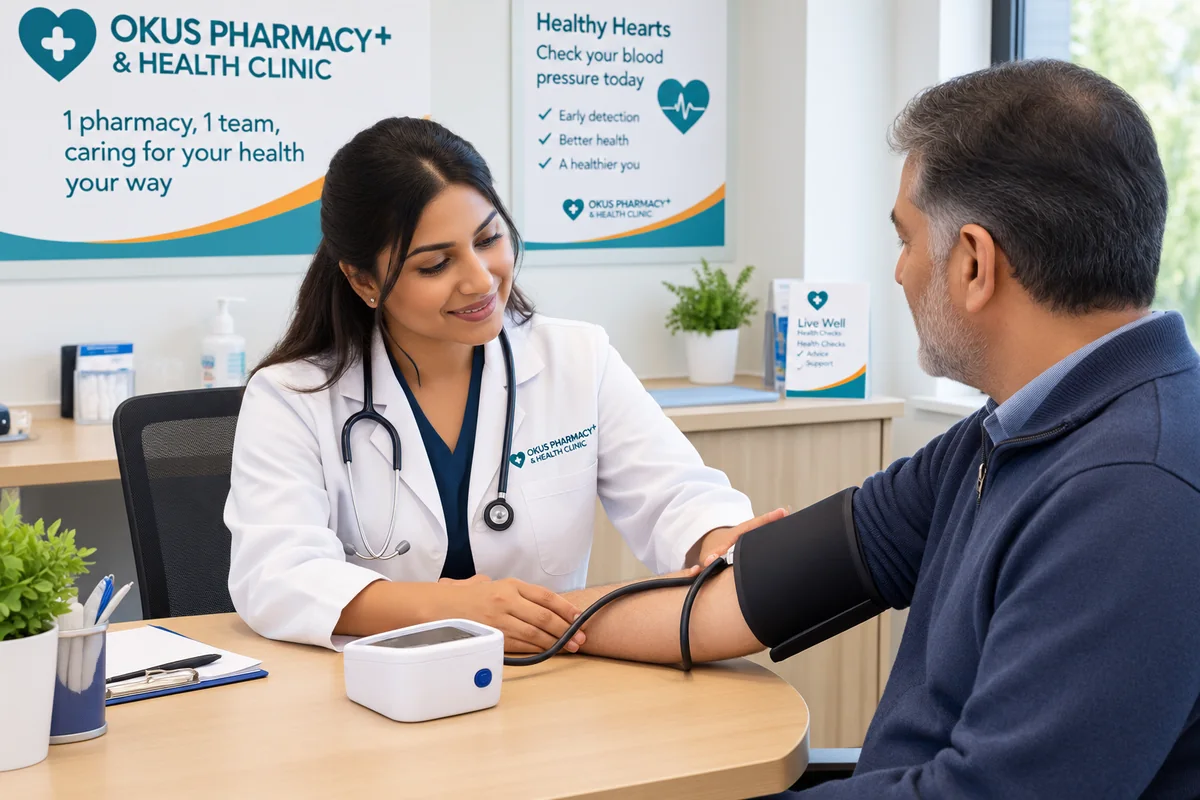
Our Blood Pressure Check service provides a quick and simple way to monitor your cardiovascular health. High blood pressure (hypertension) often has no symptoms, so regular checks are essential for early detection and prevention of serious conditions such as heart disease and stroke.
We offer two types of blood pressure monitoring:
- Standard check — a quick measurement taking just a few minutes, available as a walk-in during opening hours. Our trained pharmacy team will take your reading, explain the results, and advise on next steps if needed.
- 24-hour ambulatory blood pressure monitoring (ABPM) — for a more detailed assessment, you wear a small portable monitor for 24 hours that takes regular readings throughout the day and night. This is particularly useful for confirming borderline results before starting medication.
If your reading is high or borderline, we can refer you to your GP for further investigation and ongoing management. This service is free for eligible patients as part of NHS cardiovascular prevention initiatives.
Key Features
- Free NHS service for eligible patients
- Quick and simple — results in minutes
- Walk-ins welcome during opening hours
- 24-hour ambulatory monitoring (ABPM) available
- Expert advice and GP referral if needed
Understanding your reading
What your blood pressure numbers mean
Blood pressure is shown as two numbers, like 120/80. The top (systolic) number is the pressure when your heart beats; the bottom (diastolic) number is the pressure when it rests between beats. As a general guide:
90/60 – 120/80 mmHg
Most adults should aim for a reading in this range.
120/80 – 140/90 mmHg
A good time to make lifestyle changes and keep an eye on it.
140/90 or higher mmHg
Hypertension (or an average of 135/85+ at home). Worth acting on.
90/60 or lower mmHg
Usually harmless, but mention any dizziness or faint feelings to us.
One high reading doesn’t necessarily mean you have high blood pressure — it’s the average over time that counts, which is why we may suggest 24-hour monitoring. These figures are a general guide; your pharmacist or GP will interpret your reading for you.
Healthy hearts
Why a quick check matters
High blood pressure is often called the “silent” condition because you can feel completely well while it quietly raises your risk. A two-minute check gives you peace of mind — or the chance to act early.
- Early detection — high blood pressure usually has no symptoms, so a quick check is often the only way to catch it
- Better health — knowing your numbers means you can act early and lower your risk of heart attack, stroke and kidney problems
- A healthier you — even small changes can make a real difference, and we’ll point you in the right direction
Your appointment
What happens at your check
It’s simple and relaxed — no needles, no fuss. Here’s what to expect:
- A quick, painless check with an upper-arm cuff — it takes just a few minutes
- If your reading is raised, we can offer 24-hour monitoring (ABPM) — you wear a small monitor that takes readings through the day for a truer average
- We share your results with your GP so your records stay up to date
- You’ll get friendly advice on simple ways to look after your heart
- If a reading is very high, we’ll arrange an urgent GP referral so you’re seen quickly
To get the most accurate reading, try to avoid caffeine, smoking and exercise for about 30 minutes beforehand, and rest for a few minutes before your check.
Good to know
Simple ways to help keep it healthy
- Cut down on salt — aim for less than 6g a day (about a teaspoon)
- Eat plenty of fruit and vegetables
- Stay active — around 150 minutes of moderate exercise a week
- Keep to a healthy weight
- Watch your alcohol and cut back on caffeine if it’s high
- If you smoke, stopping is one of the best things you can do — ask about our Stop Smoking Service
- Find ways to manage stress and get enough sleep
- If you’ve been prescribed blood pressure medicine, take it as directed — don’t stop without advice
When to get help sooner
A single high reading is common and usually nothing to worry about. But get medical advice straight away if you have:
- A very high reading — around 180/120 or higher
- A severe or sudden headache, chest pain, or shortness of breath
- Vision problems, nosebleeds, or a pounding in your chest, neck or ears
If you have chest pain, or any signs of a stroke (face drooping, arm weakness, slurred speech), call 999. For non-urgent worries you can also call NHS 111 or speak to our pharmacy team.
Good to know
Frequently asked questions
Is the blood pressure check free?
Yes. Under the NHS Blood Pressure Check Service it’s free for eligible adults — generally those aged 40 and over who haven’t been diagnosed with high blood pressure and haven’t had a check in the last 6 months. Others can be referred by their GP. Ask us and we’ll check.
Do I need an appointment?
Walk-ins are welcome during opening hours for a clinic check. If you need 24-hour monitoring (ABPM), we’ll usually arrange a short appointment to fit the monitor.
Does it hurt?
No. A cuff gently inflates on your upper arm for a few seconds — it’s quick and painless.
What is a normal blood pressure?
As a general guide, ideal is between 90/60 and 120/80. A clinic reading of 140/90 or higher (or an average of 135/85 or higher at home) is considered high. Your pharmacist will explain what your numbers mean for you.
What is 24-hour monitoring (ABPM)?
You wear a small, portable monitor that takes readings automatically through the day and night. Because it measures your blood pressure while you go about your normal routine, it gives a more accurate average and avoids the “white-coat” effect some people get in a clinic.
I had one high reading — does that mean I have high blood pressure?
Not necessarily. Blood pressure naturally goes up and down, so it’s the average over time that matters. If a reading is raised, we’ll usually offer 24-hour monitoring or repeat checks before anything is decided.
Will you tell my GP?
Yes — with your consent, your results are shared with your GP so your records stay up to date and any follow-up can be arranged.
How often should I get checked?
If your blood pressure is normal, it’s a good idea to have it checked at least every 5 years — more often if it’s been raised or you have other risk factors. Our team can advise what’s right for you.
Written and clinically reviewed by Tanvir Ali, MPharm — Superintendent Pharmacist & Owner. Okus Pharmacy & Health Clinic is a GPhC-registered pharmacy. Meet our pharmacist.
Last reviewed: August 2026. This page provides general health information and is not a substitute for personalised medical advice — please speak to our pharmacist about your individual circumstances.
Other Services
Travel Vaccination Clinic
Stay protected wherever you travel. Expert advice and a comprehensive range of travel vaccines available.
PrivateVitamin B12 Wellness Clinic
Boost your energy and support your wellbeing with our professional B12 injection service.
PrivateWeight Loss Clinic
Personalised support and treatments to help you achieve your weight loss goals.