Oral Thrush Treatment
Get expert assessment and treatment for oral thrush directly from your pharmacist — no appointment needed.
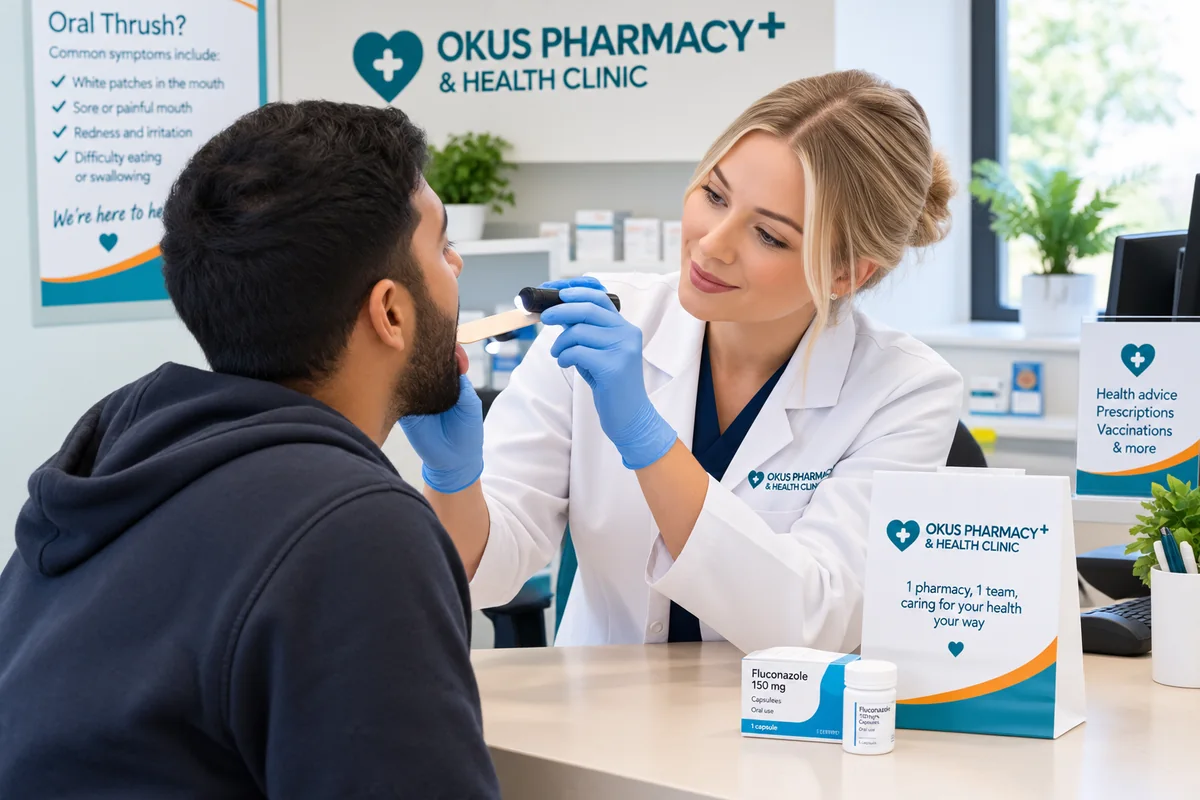
Our pharmacist can assess and treat oral thrush (oral candidiasis) quickly and conveniently, without the need for a GP appointment. Oral thrush is a fungal infection caused by an overgrowth of Candida albicans in the mouth, presenting as white patches on the tongue, inner cheeks, or roof of the mouth.
Oral thrush is common and usually mild. It is more prevalent in babies, older adults, denture wearers, and people taking antibiotics, steroid inhalers, or immunosuppressant medications. People with diabetes or weakened immune systems may also be more susceptible.
Our pharmacist will assess your symptoms and, where appropriate, supply antifungal medication such as miconazole gel or nystatin suspension. Treatment is generally effective within one to two weeks. If your symptoms are severe or don't respond to initial treatment, we'll refer you to your GP for further investigation.
Following assessment, antifungal treatment can be supplied where appropriate. Please speak to our pharmacist about the options available to you.
Key Features
- Discreet assessment from your pharmacist
- No appointment needed — walk in during opening hours
- Expert assessment from qualified pharmacist
- Antifungal medication supplied if appropriate
- Referral to GP if further care is needed
Symptoms
Signs and symptoms to look out for
Oral thrush is usually mild, and symptoms can come on gradually. You may notice one or several of the following:
White patches in the mouth
Creamy-white patches on the tongue, inner cheeks, gums or roof of the mouth. They can often be wiped away, sometimes leaving a red or slightly tender area underneath.
A red or sore mouth
The lining of the mouth or the tongue may look red and feel sore, raw or sensitive.
An unpleasant taste or loss of taste
Food and drink may taste different, or you may notice a lingering unpleasant taste in your mouth.
A cottony feeling
A dry, cotton-wool-like sensation inside the mouth is common.
Cracks at the corners of the mouth
Sore, cracked or red skin at the corners of the lips (known as angular cheilitis) can occur alongside thrush.
Discomfort eating or swallowing
Mild soreness when eating or drinking. Pain or difficulty swallowing should be checked promptly — see “when to seek further help” below.
In babies
White patches that do not rub off easily and possible reluctance to feed. A breastfeeding mother may develop sore, cracked or itchy nipples.
Causes
What causes oral thrush?
Oral thrush happens when a yeast called Candida — which lives harmlessly in most people’s mouths — multiplies more than usual. This is more likely when the natural balance in the mouth is upset. You may be more prone to it if any of the following apply:
- Recently taking a course of antibiotics
- Using a steroid (preventer) inhaler, especially without a spacer or without rinsing afterwards
- Wearing dentures, particularly if they don’t fit well or aren’t cleaned and removed overnight
- Having a dry mouth
- Living with diabetes, especially if blood sugar runs high
- Having a weakened immune system — for example during chemotherapy or when taking immunosuppressant medicines
- Being a baby or an older adult
- Smoking
Treatment
How we treat oral thrush
After a short, discreet assessment, our pharmacist can supply antifungal treatment where it’s appropriate for you. The two most commonly used options are:
Miconazole oral gel
An antifungal gel applied to the affected areas of the mouth, usually several times a day. Our pharmacist will check it’s suitable alongside any other medicines you take — for example blood thinners such as warfarin, or certain statins.
Nystatin oral suspension
An antifungal liquid that is held in the mouth and swallowed. It is often used when a gel isn’t suitable, or for babies and denture wearers.
What to expect
It’s important to finish the full course — usually around 7 days, and often continued for a couple of days after symptoms clear to stop it returning. Most cases improve within one to two weeks. If you wear dentures, clean them thoroughly and leave them out overnight while treating thrush. For babies, denture wearers, or symptoms that don’t settle, our pharmacist will recommend the most appropriate option or refer you to your GP.
Self-care
Self-care and preventing it coming back
A few simple habits can help your treatment work and reduce the chance of oral thrush returning:
- Brush your teeth twice a day, clean between them, and rinse your mouth after meals
- If you use a steroid inhaler, rinse your mouth or brush your teeth afterwards — and use a spacer if you have one
- Clean dentures every day, take them out overnight, and check that they still fit well
- Keep on top of your blood-sugar control if you have diabetes
- If you smoke, cutting down or stopping can help
- For babies, regularly sterilise dummies, bottles and feeding equipment
When to seek further help
Oral thrush is usually easily treated, but please see your GP or seek medical advice if:
- Your symptoms don’t improve within one to two weeks of treatment, or they keep coming back
- You have pain or difficulty swallowing, or feel the infection may have spread to your throat
- You have a weakened immune system — for example from chemotherapy or immunosuppressant medicines
- Thrush keeps returning without an obvious cause
- A baby is affected and is not feeding well
If you’re ever unsure, our pharmacist is happy to take a look and point you in the right direction.
Good to know
Frequently asked questions
Is oral thrush contagious?
In healthy adults it isn’t usually passed on through everyday contact. It can, however, pass between a breastfeeding baby and mother, so both may need treating at the same time.
How long does oral thrush take to clear up?
With antifungal treatment, most cases improve within one to two weeks. Finishing the full course — even once symptoms ease — helps stop it coming back.
Can I treat oral thrush myself?
Good oral hygiene helps, but oral thrush usually needs antifungal treatment. Our pharmacist can assess your symptoms and supply treatment where appropriate, with no GP appointment needed.
Do I need to stop using my inhaler?
No — don’t stop a prescribed inhaler. Rinsing your mouth after using a steroid inhaler, and using a spacer, can lower the chance of thrush. Speak to us for advice.
Written and clinically reviewed by Tanvir Ali, MPharm — Superintendent Pharmacist & Owner. Okus Pharmacy & Health Clinic is a GPhC-registered pharmacy. Meet our pharmacist.
Last reviewed: August 2026. This page provides general health information and is not a substitute for personalised medical advice — please speak to our pharmacist about your individual circumstances.
Other Services
Travel Vaccination Clinic
Stay protected wherever you travel. Expert advice and a comprehensive range of travel vaccines available.
PrivateVitamin B12 Wellness Clinic
Boost your energy and support your wellbeing with our professional B12 injection service.
PrivateWeight Loss Clinic
Personalised support and treatments to help you achieve your weight loss goals.